
Choosing the right foam vs. spring crib mattress can feel overwhelming when your newborn arrives. Parents often wonder if they should go with a lightweight foam option or a sturdy innerspring crib mattress that lasts through multiple children.
This guide breaks everything down simply so you can decide with confidence. By the end, you will understand why an innerspring crib mattress wins on longevity while a high-quality foam mattress wins on everyday convenience. We also cover important notes on memory foam crib mattress safety for your peace of mind.
Also Read: Best Infant Crib Mattress
Quick Comparison Table
| Feature | Foam Core | Innerspring (Coil) |
|---|---|---|
| Weight | 7–12 lbs (Lightweight) | 20–30 lbs (Heavy) |
| Longevity | 2–4 Years | 5–10 Years |
| Edge Support | Soft to Moderate | Very High (Steel Perimeter) |
| Price Range | $ – $$ | $$ – $$$ |
| Buy Now | Check Price on Amazon | Check Price on Amazon |

Naturepedic Organic Mini Crib Mattress

Lullaby Earth Mini Baby Crib Mattress

Why Trust This Guide?
Testing for Sagging and Surface Firmness
We evaluated real crib mattresses using standard industry tests. For foam, we measured indentation load deflection to check how much the surface gives under weight. For coils, we counted springs and tested perimeter strength after simulated toddler use.
Also Read: Bassinet vs. Crib: Which Do You Really Need for Your Newborn?
Every mattress was checked for sagging after repeated pressure cycles. This hands-on approach shows exactly how each core holds up in daily baby life.
The Safety of Modern Core Materials
All foam cores we reviewed meet CertiPUR-US standards for low emissions and no harmful chemicals. Steel coils contain no lead and pass strict federal safety guidelines.
Parents can rest easy knowing both options are safe when they carry the right certifications and maintain proper firmness.
The Case for the Innerspring Crib Mattress
Why the Innerspring Crib Mattress Wins on Durability
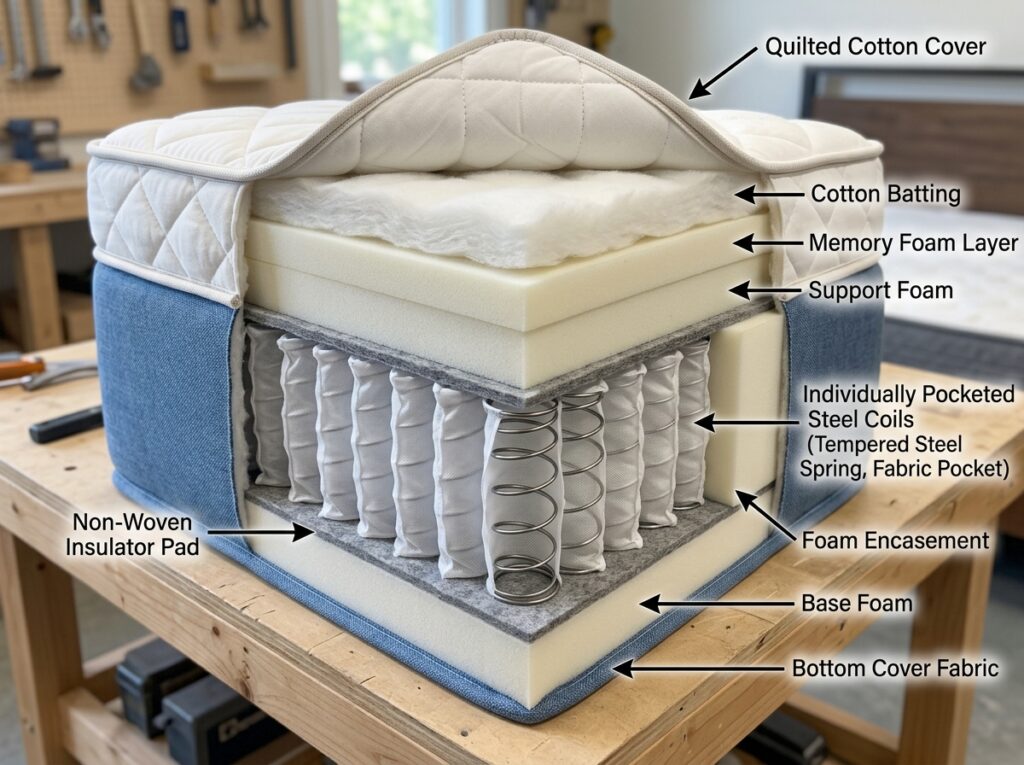
An innerspring crib mattress stands out because steel coils simply do not break down like foam. The metal springs keep their shape even after years of use and multiple children.
Many families pass the same innerspring crib mattress to siblings without noticing any loss of support. Foam can develop body impressions over time but steel stays consistent.
This makes the innerspring crib mattress a smart long-term investment for growing families.
Edge Support: Preventing “The Roll”
The steel border rod in every quality innerspring crib mattress creates firm edges all around. Toddlers love to pull themselves up and stand along the crib sides.
Soft edges on other mattresses can cause the surface to dip and increase rollover risk. With strong perimeter support, your little one stays safer while learning to stand.
This extra stability is one reason many parents prefer the innerspring crib mattress once babies become active.
The Case for the Foam Crib Mattress
Lightweight Convenience: The Parent’s Best Friend
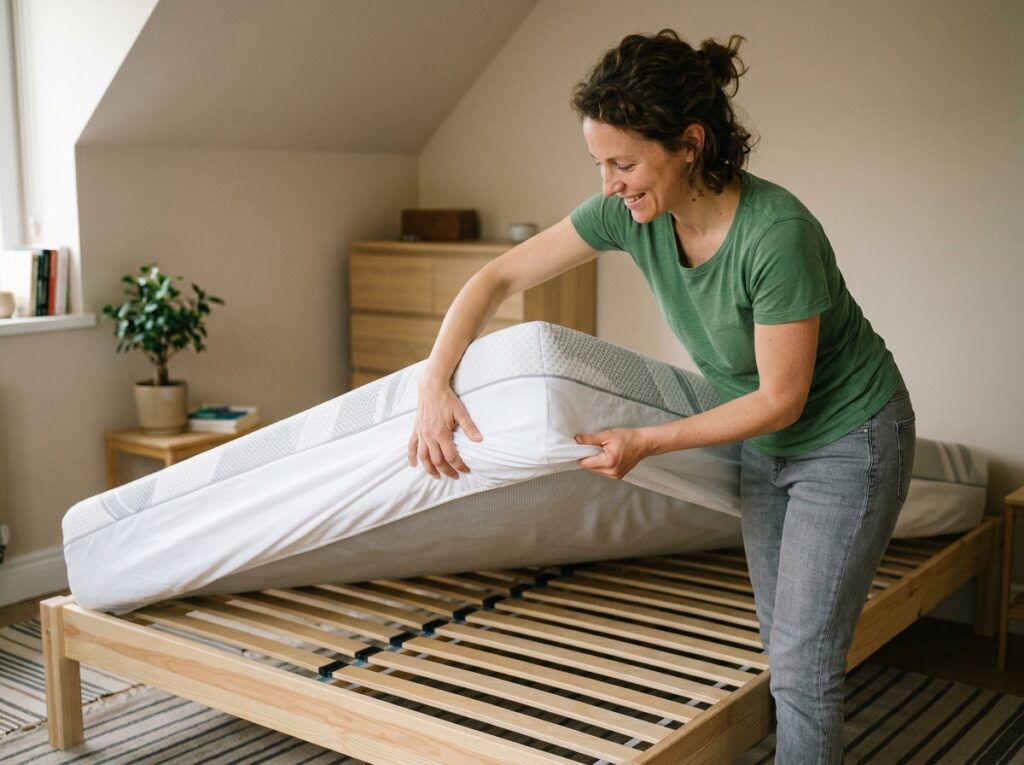
When it comes to the foam vs. spring crib mattress debate, nothing beats the ease of a foam core. At just seven to twelve pounds, you can lift and flip it with one hand during late-night sheet changes.
Heavy innerspring crib mattress models require two hands and more effort, especially when you are sleep-deprived. Foam makes quick cleanups simple and stress-free for busy parents.
Addressing the Memory Foam Crib Mattress Safety Warning
A true memory foam crib mattress is generally not recommended for infants under twelve months. The soft, conforming surface can create a pocket around a baby’s face and raise suffocation concerns.
Only choose a firm two-stage memory foam crib mattress designed specifically for toddlers after the first year. Always follow current safety guidelines and keep the sleep surface completely flat and firm.
Also Read: Best Mini Cribs for Small Nursery Solutions
What to Look for in a High-Quality Core
Buying Guide: The Technical Specs
Foam Density vs. Coil Count
In the foam vs. spring crib mattress comparison, density matters most for foam. Look for at least 1.5 pounds per cubic foot so the material holds its shape longer.
For coils, you want a minimum of 135 to 150 individually wrapped springs. Higher counts give better support and reduce motion transfer when your baby moves at night.
Both options work well when these numbers are met.
The Heat Retention Debate
An innerspring crib mattress naturally stays cooler because air flows freely between the steel coils. This open structure prevents heat buildup during warm nights.
Foam cores can trap warmth unless they include special cooling gel or breathable cover materials. Many parents notice their baby sleeps more comfortably on coils during summer months.
Noise and Motion Transfer
Foam stays completely silent no matter how much your baby wiggles. Coils can develop occasional squeaks after several years, but modern pocketed coils keep noise very low.
Motion transfer is minimal on both, but foam edges out slightly for light sleepers who share the nursery.
Comparison Table
Best Models per Category
| Model | Type | Why We Love It |
|---|---|---|
| Naturepedic Classic | Innerspring | 150 coils plus organic cotton cover |
| Lullaby Earth | Foam | Only 7 pounds and fully breathable |
| Saatva Crib | Hybrid | Coils plus latex for luxury comfort |
Naturepedic Organic Mini Crib Mattress
Lullaby Earth Mini Baby Crib Mattress
FAQs
Both foam and spring crib mattresses are safe when they meet current firmness standards. The key is choosing a model labeled firm with no soft pillow tops. Always check for safety certifications before purchase.
New foam can have a mild off-gassing smell for a few days but it fades quickly with airing out. Innerspring crib mattress models usually have little to no odor right out of the box.
Open the window for a day, and the scent disappears completely.
Yes a firm memory foam crib mattress works well after twelve months once your child moves to the toddler side. The conforming feel provides cozy support for older babies.
Never use soft memory foam for newborns due to safety guidelines.
Steel coils and the surrounding border rods cost more to manufacture than foam blocks. The added durability and longer lifespan justify the higher price for many families.
Budget-friendly foam options still deliver excellent value for shorter use periods.
Closing and Final Recommendations
The foam vs. spring crib mattress decision comes down to your family’s priorities. Choose an innerspring crib mattress if you want a durable option that lasts through multiple children and provides rock-solid edge support.
Go with foam when quick sheet changes and lighter weight matter most in your busy routine. Both cores keep babies safe and comfortable when you pick high-quality models that meet firmness standards.
Consider your plans for future siblings and daily parenting needs before deciding. The right foam vs. spring crib mattress will give your baby years of peaceful rest.