

Bassinet vs crib comparisons help parents navigate sleeping arrangements for newborn babies in limited spaces. These infant bed options balance safety with practicality for early months. Understanding differences in size and longevity guides better choices for newborn sleep safety.
Describe the fourth trimester reality: frequent night feedings, the need for proximity, and the overwhelming amount of gear. By the end of this guide, you’ll understand the structural differences, safety milestones, and whether your lifestyle requires both or just one. Explore sleeping arrangements for newborn setups alongside bassinet vs crib pros and cons.
| Feature | Bassinet | Standard Crib |
|---|---|---|
| Age Range | 0–6 Months | 0–3 Years |
| Portability | High (Wheels/Lightweight) | Low (Stationary) |
| Price Range | $60 – $350 | $200 – $800 |
| Best For | Room-sharing & C-Section | Longevity & Nursery |
| Buy Now | Shop Top Bassinets | Shop Top Cribs |
Vetting Sleep Surfaces for AAP Compliance
Explain that you only recommend surfaces that are firm, flat, and meet current safety standards for sleeping arrangements for newborn infants. All options adhere to AAP guidelines, emphasizing back sleeping and uncluttered spaces. We prioritize Greenguard certifications to minimize emissions in shared rooms.
The “Cost-Per-Night” Evaluation
How we calculated the value of a $150 bassinet used for 4 months vs. a $400 crib used for 3 years. This breaks down to about $1.25 per night for the bassinet versus $0.36 for the crib, highlighting long-term savings. Factors include durability and conversion potential for extended use.
The Case for the Bassinet: Closeness & Convenience
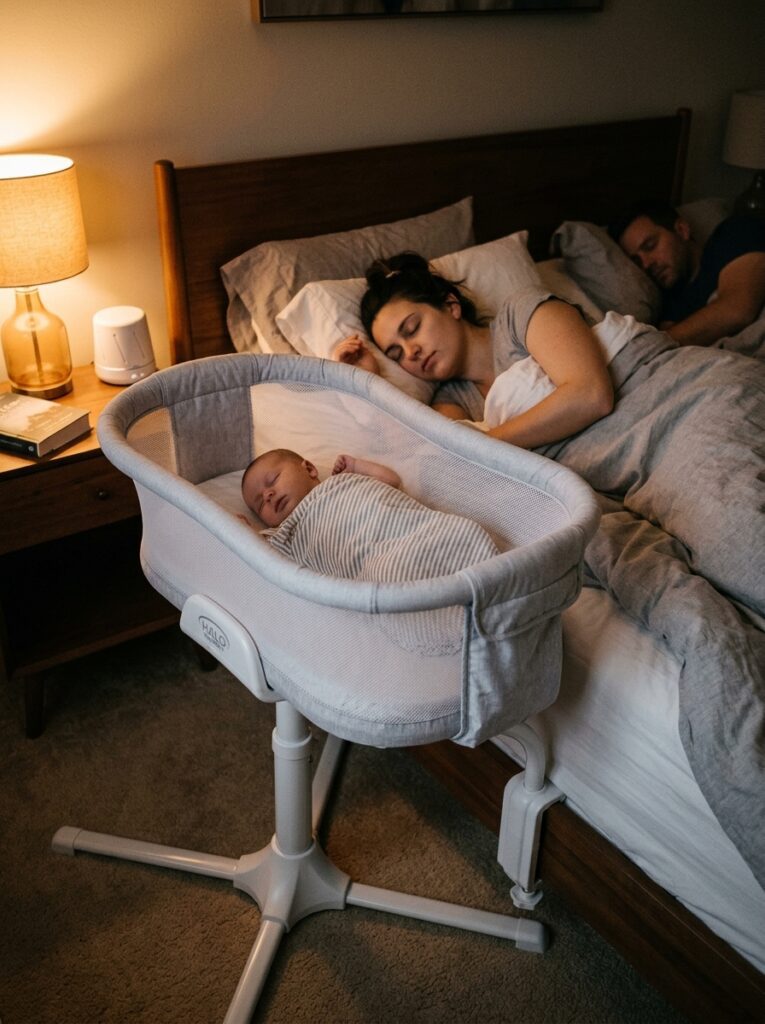
Why a Bedside Sleeper is a Recovery Essential
Bedside sleeper designs shine in bassinet vs crib debates for easing postpartum challenges. For C-section recoveries, the lower height reduces strain when lifting baby at night. Proximity fosters bonding while maintaining separate sleep surfaces, aligning with newborn sleep safety.
Parents find this setup simplifies frequent feedings without full movement. Models like the Halo BassiNest adjust to bed height for seamless access. In compact homes, it supports room sharing without overcrowding.
Portability: Keeping Baby Near During the Day
Lightweight bassinets roll easily between rooms, ideal for daytime naps under supervision. This flexibility keeps infants close during household tasks, enhancing convenience. Foldable options store compactly when not needed.
For traveling families, portable models pack into cars effortlessly. Wheels with locks ensure stability on various floors. This adaptability suits dynamic lifestyles.
The Case for the Crib: The Long-Term Investment
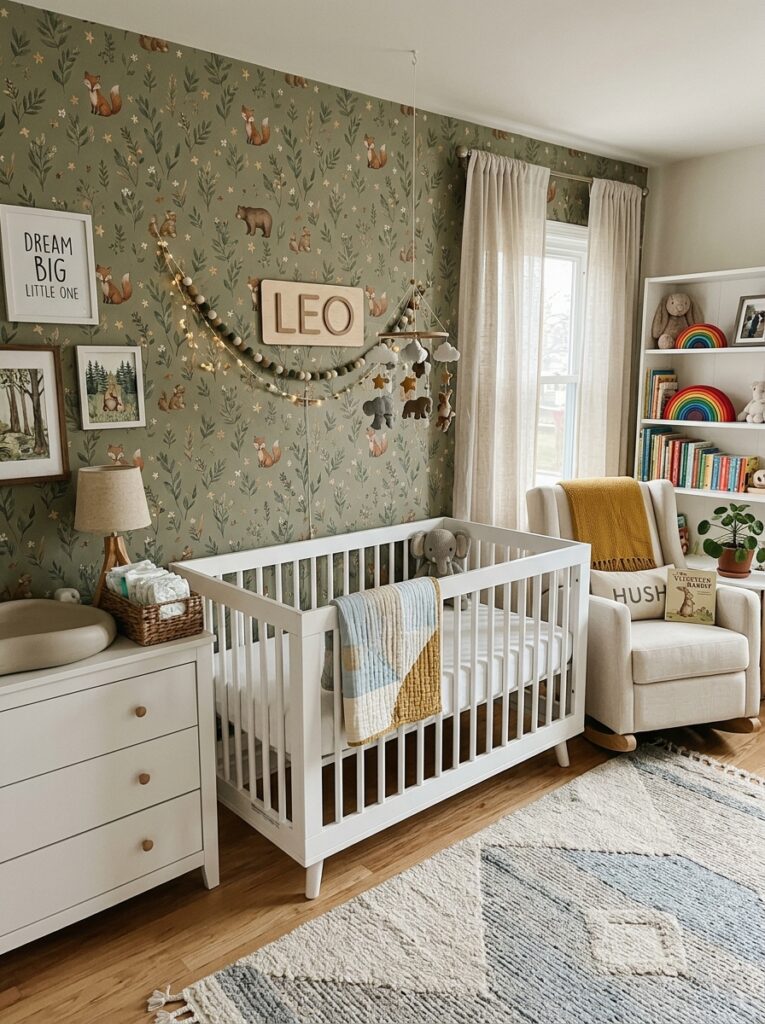
The Superior Longevity of a Full-Size Crib
In bassinet vs crib matchups, cribs offer extended use from birth to toddler years. Adjustable mattress heights accommodate growth, converting to beds for added value. This reduces future purchases.
Sturdy builds handle active children safely. Mini cribs provide a compact alternative for smaller spaces. Overall, cribs anchor nurseries effectively.
Also Read: Best Nursery Furniture under $500
The Psychological Transition: Room-Sharing to Nursery
AAP advises room sharing for at least six months to lower SIDS risks. Cribs facilitate this before independent rooms. The familiar setup eases transitions for both parent and child.
Gradual moves build confidence in separate sleeping. Decorative elements make cribs inviting long-term hubs. This supports healthy sleep habits.
Decision Factors for New Parents
Factor 1: Your Home’s Square Footage
Bassinet vs crib choices depend on available space; mini cribs bridge the gap for apartments. They offer crib durability in bassinet sizes. Measure rooms to ensure fit without clutter.
In larger homes, full cribs allow expansive nurseries. Portable options suit multi-level dwellings. Prioritize airflow and accessibility.
Factor 2: Your Recovery and Mobility
Bedside sleeper models prove essential for limited mobility post-delivery. Adjustable heights minimize bending, aiding healing. Consult doctors for personalized needs.
Swivel features enhance reach without strain. This promotes restful nights for caregivers. Safety straps add security layers.
Factor 3: The “Rolling Over” Milestone
Once babies roll, bassinets become unsafe; switch to cribs immediately. Deeper sides prevent falls during movement. Monitor development closely around four months.
Weight limits also signal transitions. Cribs provide secure environments for exploration. This milestone marks key safety shifts.
| Model | Function | Why it Works |
|---|---|---|
| Cradlewise | Smart Crib + Bassinet | Bounces and tracks sleep from 0–2 years. |
| Nestig Cloud | 3-in-1 System | Starts as a mini-crib (bassinet size) and grows. |
| Graco My View | Bassinet + Playard | A portable solution that lasts into toddlerhood. |
Yes, as long as the mattress is firm and flat. Cribs meet safety standards for immediate use. Add breathable sheets without extras. Room sharing enhances monitoring.
Explain the difference between attached sleepers and standalone bassinets. Both are safe with firm surfaces and no gaps. Attached models secure to beds properly. Follow assembly guidelines strictly.
Weight limits vs. developmental milestones like rolling. Typically around 4-6 months or 15-20 pounds. Prioritize rolling as the primary cue. Prepare cribs in advance.
Yes, use fitted mattresses designed for specific models. They ensure snug fits for safety. Avoid crib mattresses in bassinets. Opt for breathable, waterproof options.
Recommendation for parents on a budget (Skip the bassinet, go for a Mini Crib) vs. parents wanting maximum sleep (Get a Smart Bassinet for 4 months, then the Crib). Bassinet vs crib decisions hinge on lifestyle and space. These infant bed options support safe sleeping arrangements for newborn phases.