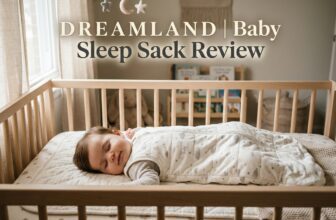

It looks like origami. It feels like a high-stakes puzzle when the baby is already crying. But once you learn how to swaddle, you unlock one of the few tools that reliably calms a newborn—and you’ll use it every single night for months.
There’s a reason hospital nurses can wrap a newborn into a perfect burrito in under twenty seconds while you’re still trying to figure out which corner goes where. Swaddling is a physical skill, not a personality trait. It takes three or four attempts to stop feeling clumsy and about a week to stop thinking about it at all.
If you’re searching for how to swaddle a newborn at 11 PM with a fussy baby on your shoulder, here’s the short version: you’re recreating the contained, slightly compressed feeling of the womb, which quiets the Moro reflex—that sudden arms-out startle that wakes newborns twenty minutes into sleep. A well-executed swaddle reduces those wake-ups. A loose one is worse than no swaddle at all, because fabric near the face is a genuine hazard.
So this guide does two things at once. It teaches you the three swaddling techniques that cover almost every baby and every blanket, and it front-loads the safety rules so the technique never outruns the reason you’re doing it. Because the folding is the easy part. The safety parameters are what most guides bury at the bottom.
The Three Methods at a Glance
| Technique | Difficulty | Best for | Why it works |
|---|---|---|---|
| The Diamond Wrap | Easy | Beginners, any blanket | Even pressure, most adjustable |
| The Square (Hospital) Fold | Moderate | Larger blankets, active kickers | Roomier hips, easier diaper checks |
| The Batwing Swaddle | Advanced | Escape artists | Double layer stops arm breakout |
Start with the diamond. Learn the square second. Only reach for the batwing if your baby has already defeated the first two.
🛒 Shop 47″x47″ muslin swaddle blankets on Amazon →
Before the First Fold: Four Safety Rules That Don’t Bend
I’m putting this before the step-by-steps on purpose. Most swaddling scares don’t come from bad folding—they come from wrapping too tight, wrapping too long, or wrapping a baby who has started to roll. Learning how to swaddle a baby safely means learning these four rules before you learn a single fold.
1. Always place the baby on their back. The American Academy of Pediatrics’ safe sleep guidance is unambiguous: back to sleep, every sleep, every time. Swaddling does not change that. It also means no swaddle use for supervised tummy time—take it off.
2. Snug, not tight. Run two fingers under the wrap at the chest. If you can’t, it’s too tight. Compression around the chest and abdomen can interfere with breathing and has been flagged in SIDS research as a risk associated with overly restrictive wrapping. Your baby should be able to take a deep breath, and you should be able to slide a hand under the fabric.
3. Hips must be able to bend. The legs should be able to fall into a “frog” position—knees bent, hips flexed. Never wrap the legs straight and tight like a mummy. Tight leg wrapping is associated with developmental hip dysplasia. This is why the bottom of the swaddle is always a loose pouch, never a bind.
4. Stop the moment rolling begins. This is the rule parents miss most often. Swaddling is safe for a baby who cannot roll. The moment your baby shows signs of rolling—often between two and four months, sometimes earlier—swaddling must stop, because a swaddled baby who rolls to their stomach cannot push back up. Transition to a sleep sack that same week. No exceptions, no “just for naps.”
One more: skip weighted swaddles. The AAP has recommended against weighted sleep products for infants due to insufficient safety evidence. Regular fabric, correctly wrapped, is the whole tool.
Technique #1: The Classic Diamond Wrap
This is the one to learn first. It works with any square blanket; it’s the most forgiving when your baby squirms, and it’s the version you’ll default to at 3 AM for the next three months.
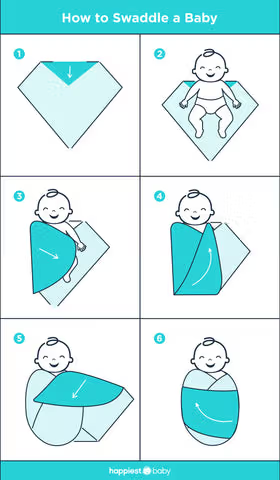
What you need: a square blanket at least 47 x 47 inches. Anything smaller and the corners won’t reach.
Step by step:
- Lay the blanket in a diamond (corner pointing toward you) and fold the top corner down about six inches, creating a straight edge across the top.
- Place your baby on their back so their shoulders sit right at that folded edge. The fold acts as a pocket behind the neck.
- Straighten the right arm down along the body, then bring the right corner across the chest and tuck it firmly under the baby’s left side. You’re aiming for a snug band across the torso, not a tight one.
- Fold the bottom corner up over the feet, leaving a hand’s width of room at the bottom so the legs can bend and kick.
- Bring the left corner across and around, tucking the tail into the back of the wrap. Check the neckline—it should sit below the chin with no fabric near the face.
The two checks that matter: two fingers under the chest band, and a loose pouch at the feet. If both pass, you’re done.
Why it works: the diamond creates even diagonal tension across the shoulders and torso, which is what settles the startle reflex. Because the fabric is distributed diagonally rather than straight across, it’s more forgiving of a wriggling baby than the square fold.
Common mistake: pulling the side corners down rather than across. The wrap should travel horizontally across the chest, not angle toward the armpit—angling leaves a gap the baby will exploit within minutes.
This is the fold most parents mean when they ask how to swaddle newborn babies without any special gear. It’s also the one that improves fastest with practice—by night four or five, you’ll stop thinking about the steps.
🛒 Shop organic cotton swaddle blankets on Amazon →
Technique #2: The “Escape-Proof” Batwing Swaddle
Some babies treat a standard swaddle as a challenge. They work one arm up, then the other, and forty minutes later they’re free and furious. The batwing exists specifically for these babies.
The concept: before the outer wrap goes on, you create a small inner layer that pins each arm individually. Your baby’s own body weight then holds the inner layer down while the outer wrap secures everything.
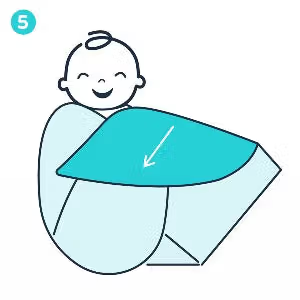
Step by step:
- Lay the blanket flat as a diamond, top corner folded down as usual.
- Fold two small triangles inward from the left and right sides, meeting near the center. These are your “wings”—each should be roughly the width of your baby’s upper arm.
- Place the baby on their back over the folded wings, shoulders at the top edge.
- Straighten each arm and tuck it inside its wing, folding the wing fabric over the arm and under the body. Both arms should be pinned gently against the sides, not strapped down.
- Complete the outer diamond wrap exactly as in Technique #1—right corner across, bottom up, left corner around and tucked.
Why it works: the inner layer prevents the arm-from-the-neck-hole escape that defeats most manual swaddles. It also means you’re not fighting to get the outer wrap drum-tight, which is where overtightening happens.
The one tradeoff: it takes two or three tries to feel natural. Practice during a calm daytime nap, not at 2 AM. And re-check the chest tightness after the outer wrap—double-layering makes it easy to overshoot.
Honest note: if you’re reaching for the batwing every single night, it’s worth asking whether a zip or hook-and-loop swaddle would serve you better. Some babies need mechanical security, not better folding. We compare the two approaches in our guide to muslin vs. Velcro swaddles for newborns, including the one real drawback of hook-and-loop—the rip sound during night changes.
Technique #3: The Square (Hospital) Fold
Many hospitals teach this version, and it’s sometimes called the “Dudu” fold in parenting forums. It starts with the blanket as a square rather than a diamond, which changes where the fabric ends up.

Step by step:
- Lay the blanket as a square, not a diamond, with one edge parallel to you.
- Fold the top edge down a few inches to create a straight collar.
- Place the baby with shoulders at the folded edge.
- Bring the left side across the chest and tuck it under the right side, keeping the arm down.
- Bring the bottom edge up into a roomy pouch, then bring the right side across and tuck or tie at the front.
What’s different: the square orientation produces a wider, baggier bottom half and a more open neckline. The legs get noticeably more room to kick, and the diaper area is easier to access without unwrapping the whole upper body.
Best for: bigger babies, active kickers, and larger blankets where a diamond wrap ends up with too much leftover fabric. It’s also a good choice if your baby runs warm, because the looser bottom increases airflow.
Tradeoff: the square fold is slightly less secure at the shoulders than the diamond. If your baby breaks out of it repeatedly, go back to the diamond, or move to the batwing.
If you already know how to swaddle a newborn with the diamond and want a second option for a bigger, stronger baby, this is the natural upgrade.
Troubleshooting: The Four Problems Everyone Hits
“My baby hates being swaddled.”
Try arms-up first. Some babies genuinely need their hands near their face to self-soothe, and forcing arms down produces a fight every night. A swaddle with arms-up styling, or a swaddle that allows one arm out, often solves it. If your baby still resists after a week of trying, that’s information—not a failure.
“They break out within minutes.”
Two likely causes: the wrap is too loose at the chest, or the blanket is too small. Measure your blanket. Under 47 inches square, most swaddling techniques simply don’t have enough fabric to stay put.
“They wiggle so much I can’t finish the wrap.”
The bouncing trick: hold and gently sway or bounce the baby while you wrap, rather than laying them flat and still. Movement keeps the startle reflex quiet long enough for you to finish. Practice during calm daytime wake windows so your night-time attempts aren’t your first rehearsal.
“It’s the middle of summer, and they’re sweating.”
That’s a temperature problem, not a swaddling problem. Lightweight muslin, a single layer, and a cooler room. Our TOG rating guide explains how to match fabric weight and layers to room temperature—the short version is that a swaddled baby generally needs one fewer layer underneath than an adult in the same room, and the reliable temperature check is the chest or back of the neck, never the hands or feet.
Choosing the Blanket: Size, Fabric, and Certifications
Size is not a detail. A 30 x 30 receiving blanket is too small for any of these techniques. You need 47 x 47 inches minimum, and larger is more forgiving.
Fabric matters for grip. Muslin has natural friction, which is why it holds a fold better than silky bamboo or jersey blends. Jersey is softer against skin but slips. If you’re learning how to swaddle, start with muslin.
Fabric also matters for skin. A newborn’s skin is significantly thinner than an adult’s, and they’ll be wrapped in this fabric for 12+ hours a day. If your baby has eczema or reactive skin, look for GOTS-certified organic cotton—that certification covers the fiber from farm forward, not just the finished fabric. Our roundup of the best organic baby swaddle blankets for newborns covers which brands actually hold up through repeated washing and which certifications are worth paying for.
And skip the marketing claims. “Wrinkle-free” and “flame-retardant” finishes usually mean chemical treatments you don’t want against a newborn’s skin. Plain, unbleached, organic cotton needs neither.
Manual Wrap vs. Easy-Swaddle Gear
| Feature | Manual blanket | Zip / hook-and-loop swaddle |
|---|---|---|
| Cost | Low | Moderate |
| Learning curve | Real (a few days) | Almost none |
| Fit | Custom to any baby | Size-specific |
| Noise at night | Silent | Hook-and-loop rips audibly |
| Lifespan | Years (blanket, cover, burp cloth) | Months (sleep only) |
| Escape resistance | Skill-dependent | High |
The honest answer for most families: own both. Use the manual wrap for naps and daytime, and keep one zip swaddle for the nights when you’re too tired to fold correctly. They’re not competing philosophies—they’re different tools for different energy levels.
When to Stop Swaddling (The Rule That Overrides Everything)
Stop all swaddling techniques the moment your baby shows signs of rolling—usually between two and four months, occasionally earlier. Signs include rolling to one side during play, pushing up during tummy time, and consistently trying to turn during changes.
Why this is non-negotiable: a swaddled baby who rolls onto their stomach cannot use their arms to lift or turn their head back. That’s the mechanism behind the recommendation, and it’s why “just for naps” isn’t a workaround.
The transition plan: switch to a sleep sack in the same week. If the change disrupts sleep, use a transitional swaddle with zip-off sleeves—start with both arms in, then one arm out for a few nights, then both out. The gradual version takes about a week and is much gentler than going cold turkey.
One last temperature note: once you move to a sleep sack, the TOG rating becomes your main tool. A 1.0 TOG sack is the year-round baseline for a room between 69 and 74°F; go lighter in summer, heavier below 68°F.
FAQs
Yes, and it’s the most common mistake. Use the two-finger test at the chest. The wrap should feel snug and contained, not compressive. Tight leg wrapping is a separate problem—always leave the hips free to bend.
Yes, as long as your baby hasn’t started rolling. It’s just a double-layer manual wrap, not a different safety category.
Three. One in use, one in the wash, one clean. Muslin dries fast, so three is genuinely enough—and it means you’re never doing a midnight load.
No. Swaddling is a tool, not a requirement. Many families swaddle for night sleep and use a sleep sack for naps once the baby is a few weeks old.
Then you stop at two months. Age is a guide; the rolling milestone is the actual trigger.
Ask your pediatrician. Overheating is a known risk factor in SIDS research, and a swaddle reduces the body’s ability to shed heat.
Practice on a doll or a rolled towel first. It sounds silly, but it removes the pressure of a crying baby and lets the fold pattern become muscle memory before you’re doing it at 2 AM.
Closing + Final Recommendations
Learning how to swaddle is a two-day skill with a three-month payoff. Master the diamond wrap first, add the square fold when your baby gets bigger and kickier, and keep the batwing in reserve for the escape artist.
Then hold the four safety rules above everything else: back to sleep, two fingers of room at the chest, hips free to bend, and stop the day rolling starts.
If you only take one thing from this guide, take this: how to swaddle a newborn correctly matters far less than when to stop. The fold is a skill. The rules are what keep it safe.
Those swaddling techniques will get you through the fourth trimester. The rules are what get you through it safely.