

You check the thermostat: 68°F. You check your baby: their hands are like ice, but their neck is warm. Do you add a layer or leave them be?
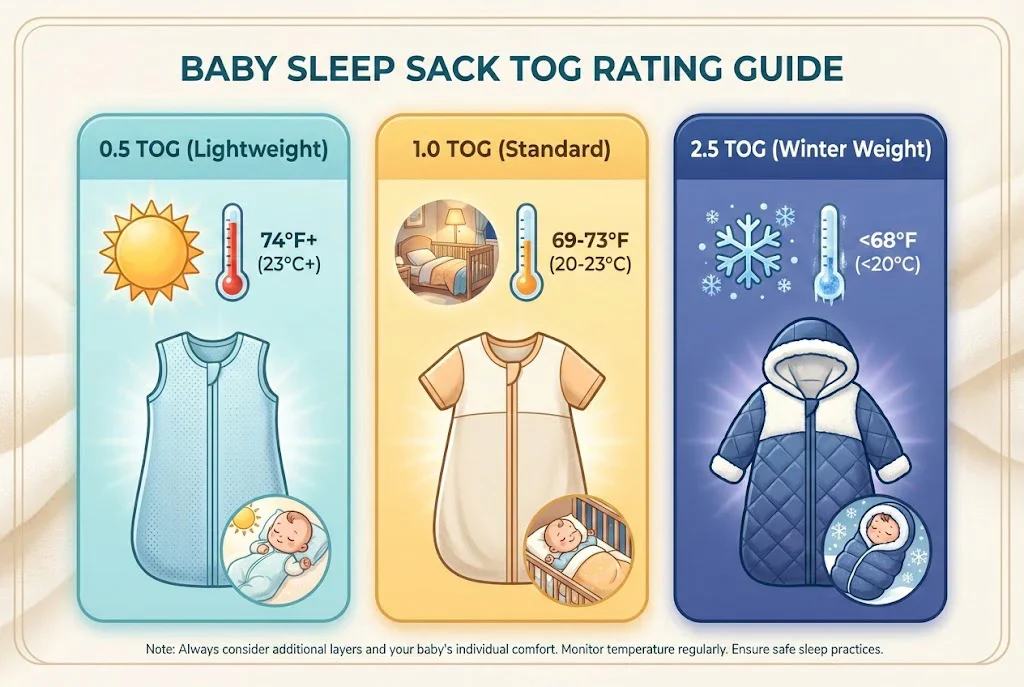
In this TOG rating guide, we demystify TOG ratings and provide a clear what-to-wear-under-sleep-sack chart to take the guesswork out of every season. Understanding baby sleep temperature helps you create safe, comfortable nights no matter the weather.
Also Read: Halo Sleep Sack Review
Master TOG & Temperature Chart
| Room Temperature | Recommended TOG | What to Wear Underneath |
|---|---|---|
| Over 75°F (24°C+) | 0.2 – 0.5 TOG | Diaper only or short-sleeve bodysuit |
| 69°F – 74°F (21°C – 23°C) | 1.0 TOG | Short-sleeve bodysuit or light PJs |
| 61°F – 68°F (16°C – 20°C) | 2.5 TOG | Long-sleeve bodysuit + footie PJs |
| Under 60°F (<16°C) | 3.5 TOG | Long-sleeve bodysuit + fleece PJs |
Why Trust This Guide
The Science of Thermal Resistance
TOG stands for Thermal Overall Grade. It measures insulation, not weight. A thin merino wool sleep sack can have a higher TOG than a thick cotton one because the fibers trap more air. This tog rating guide uses real lab-tested values so you always know exactly how much warmth your baby receives.
The baby sleep temperature stays steady when you follow these numbers. Parents who use the right TOG report fewer wake-ups and more confident bedtime routines. The guide removes the guesswork that used to come with layering.
Preventing SIDS Through Temperature Control
The 2026 pediatric guidelines list overheating as a primary risk factor for SIDS. Using the correct tog rating guide is a vital safety habit that keeps your baby in the safe zone. A wearable blanket with the proper TOG rating maintains core temperature without letting the nursery air create hot spots.
This approach follows the bare crib rule while still giving reliable warmth. The TOG rating guide helps every parent make quick, evidence-based choices that protect their little one all night long.
The Deep Dive: How to Use the Guide
The “Ideal” Nursery Temperature
Most experts agree that 68°F to 72°F (20°C to 22°C) is the sweet spot for baby sleep temperature. Keeping the room cool but comfortable promotes deeper REM cycles and longer stretches of sleep. Babies settle faster and wake less when the air stays in this range.
A slightly cooler nursery also reduces overheating risk. The TOG rating guide pairs perfectly with this temperature window. You can dress your baby lightly underneath a 1.0 TOG sleep sack and know the combination will feel just right.
Parents often worry about drafts or seasonal changes. The baby’s sleep temperature stays stable when you set the thermostat once and adjust layers according to the chart. This simple habit creates predictable, restful nights for the whole family.
Decoding the TOG Ratings
0.5 TOG: The Summer Essential
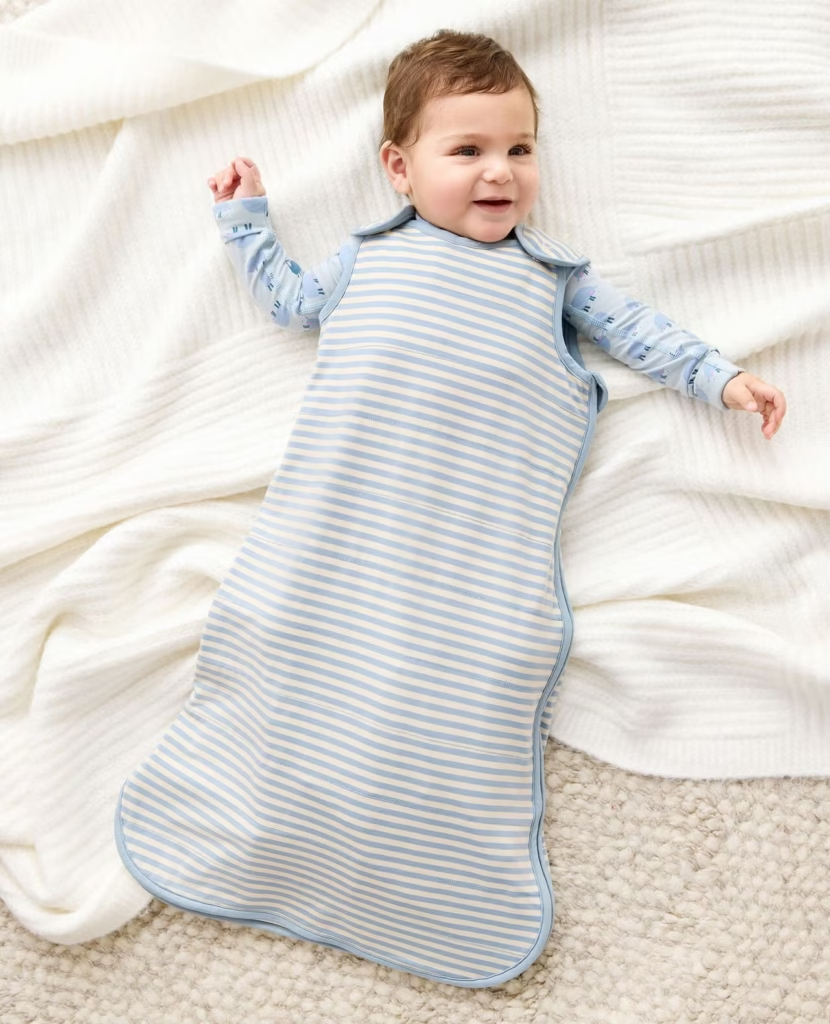
Choose a 0.5 TOG sleep sack for heatwaves and non-AC rooms. These lightweight options use single-layer muslin or bamboo that lets air flow freely. Your baby stays cool even when the room climbs above 75°F.
The low TOG rating prevents sweaty nights while still offering a gentle layer of comfort. The tog rating guide recommends this weight as the go-to for warm weather. Many families keep one on hand year-round for travel or unexpected warm spells.
1.0 TOG: The “Year-Round” Favorite
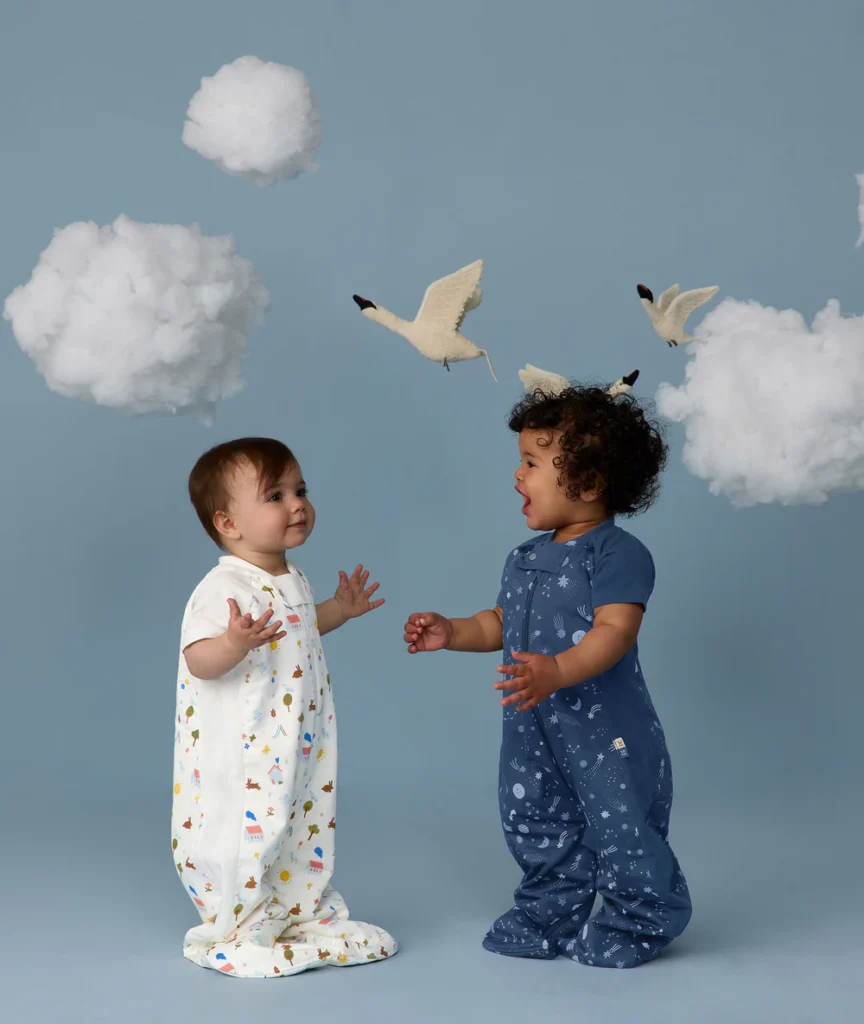
The 1.0 TOG rating works beautifully for spring, fall, and climate-controlled homes. This versatile sleep sack is the most popular choice for a baby registry because it covers most everyday nursery conditions between 69°F and 74°F.
Parents love how the tog rating guide makes this weight so practical. Pair it with a short-sleeve bodysuit for average nights or add a light long-sleeve layer when the temperature dips slightly. The baby’s sleep temperature stays balanced without extra blankets.
2.5 TOG: The Winter Protector
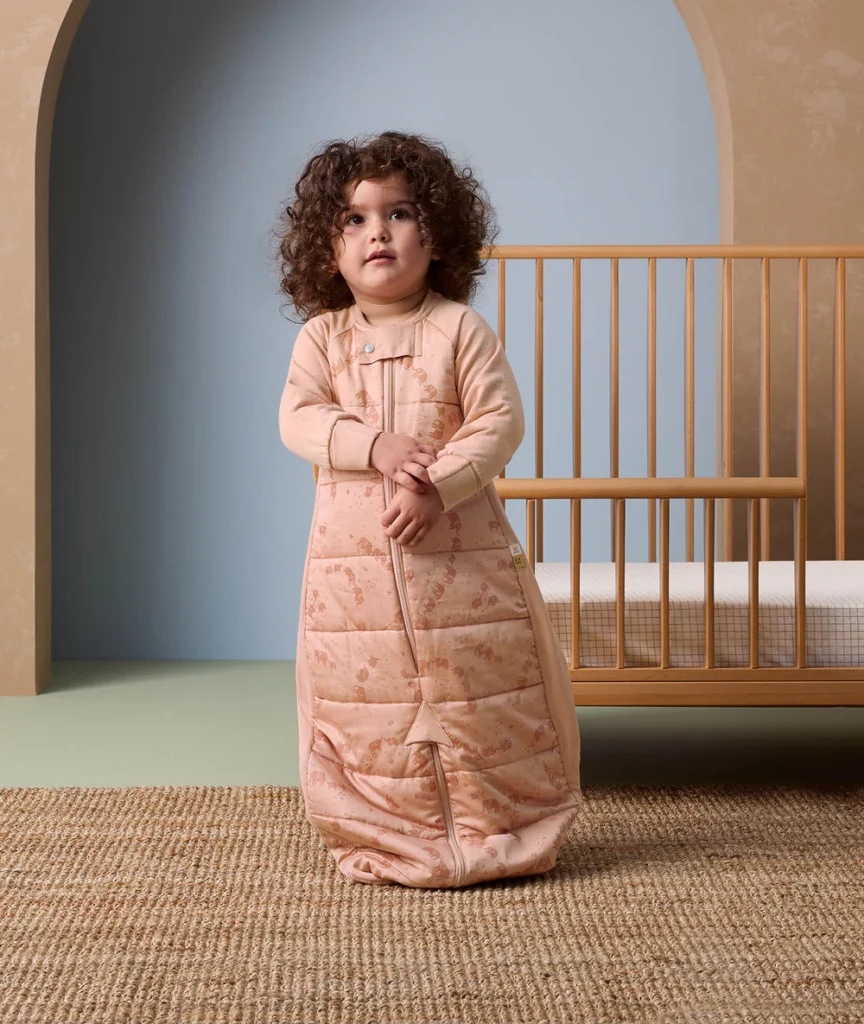
A 2.5 TOG sleep sack becomes the winter essential for drafty houses and snowy nights. It pairs perfectly with long-sleeve organic cotton layers when the room drops below 68°F. The extra insulation keeps core warmth steady without bulk.
The tog rating guide highlights this rating for colder climates. Your baby sleeps soundly through the coldest months while the baby sleep temperature remains safe and comfortable. Many parents call it their seasonal lifesaver.
What to Wear Under the Sack: The Layering Rules

The “One More Layer” rule makes what to wear under sleep sack decisions simple. Dress your baby in one more layer than you would wear in the same room. A 1.0 TOG sleep sack plus a fleece sleeper equals roughly the warmth of a 2.5 TOG option.
This mixing and matching system gives you total control over baby sleep temperature. Start with the base layer that matches the room, then add the sleep sack on top. The tog rating guide turns complicated bedtime math into an easy formula.
The wearable blanket works best when layers sit directly against the skin. Cotton or bamboo breathes well and moves moisture away. The tog rating guide encourages natural fabrics so your baby stays dry and comfortable all night.
The “Chest & Back” Comfort Check
Forget the Hands and Feet!
A baby’s hands and feet are not reliable indicators of core temperature. Extremities often feel cooler because blood flow prioritizes the torso. The tog rating guide teaches you to ignore cold fingers and focus on the important areas instead.
The Test
Place your hand on their chest or the back of their neck. If the skin feels sweaty or flushed, remove a layer immediately. If it feels cool to the touch but not icy, add one more layer. This quick check keeps baby sleep temperature in the perfect zone every time.
The sleep sack makes this test even easier because the garment stays in place. One gentle touch tells you everything you need to know. The tog rating guide turns this simple habit into a confident parenting tool.
Comparison Table: Fabric Breathability vs. TOG
| Fabric | Best TOG for this Fabric | Breathability Rating |
|---|---|---|
| Bamboo Rayon | 0.5 – 1.0 | 5 stars |
| Cotton Muslin | 0.5 | 5 stars |
| Merino Wool | 4-Season (Active) | 5 stars |
| Microfleece | 1.0 – 2.5 | 3 stars |
FAQs
Yes. A 2.5 TOG sleep sack at 72°F can quickly lead to overheating. The tog rating guide recommends dropping to a 1.0 TOG or lighter layer in warmer rooms. Always check the chest for signs of sweat.
Never exceed 4.0 TOG for infants. Higher ratings trap too much heat and raise baby sleep temperature risks. The tog rating guide keeps every choice well within safe pediatric limits.
No. Adding layers on top defeats the purpose and creates safety risks. The tog rating guide advises placing all extra warmth underneath the sleep sack so the garment stays secure and breathable.
High-quality sleep sacks hold their TOG rating through many washes. Gentle cycles and low-heat drying preserve the insulation. The tog rating guide still applies the same numbers even after repeated use.
Closing + Final Recommendations
When in doubt, it is safer for a baby to be slightly too cool than slightly too warm. Use a 1.0 TOG sleep sack as your baseline and adjust with bodysuits as needed. The TOG rating guide makes every season simple and safe.
The right baby sleep temperature strategy gives you confidence at bedtime and peace of mind through the night. The tog rating guide takes the stress out of layering so you can focus on enjoying those quiet moments.
Keep the chart handy and trust the chest check. Your baby will sleep longer, wake happier, and stay safe through every temperature swing.